I have long been a fan of all things slavic. Especially the food. Borcht, Blini, Golubtsi; impeccable flavor and very fun to cook. In my exploration of slavic cuisine, I found kvass and decided to try make some. What started as a one off thing is slowly becoming a hobby, and maybe it will grow into a movement. Let me push up my nerd glasses and explain:
The types of fermentation:
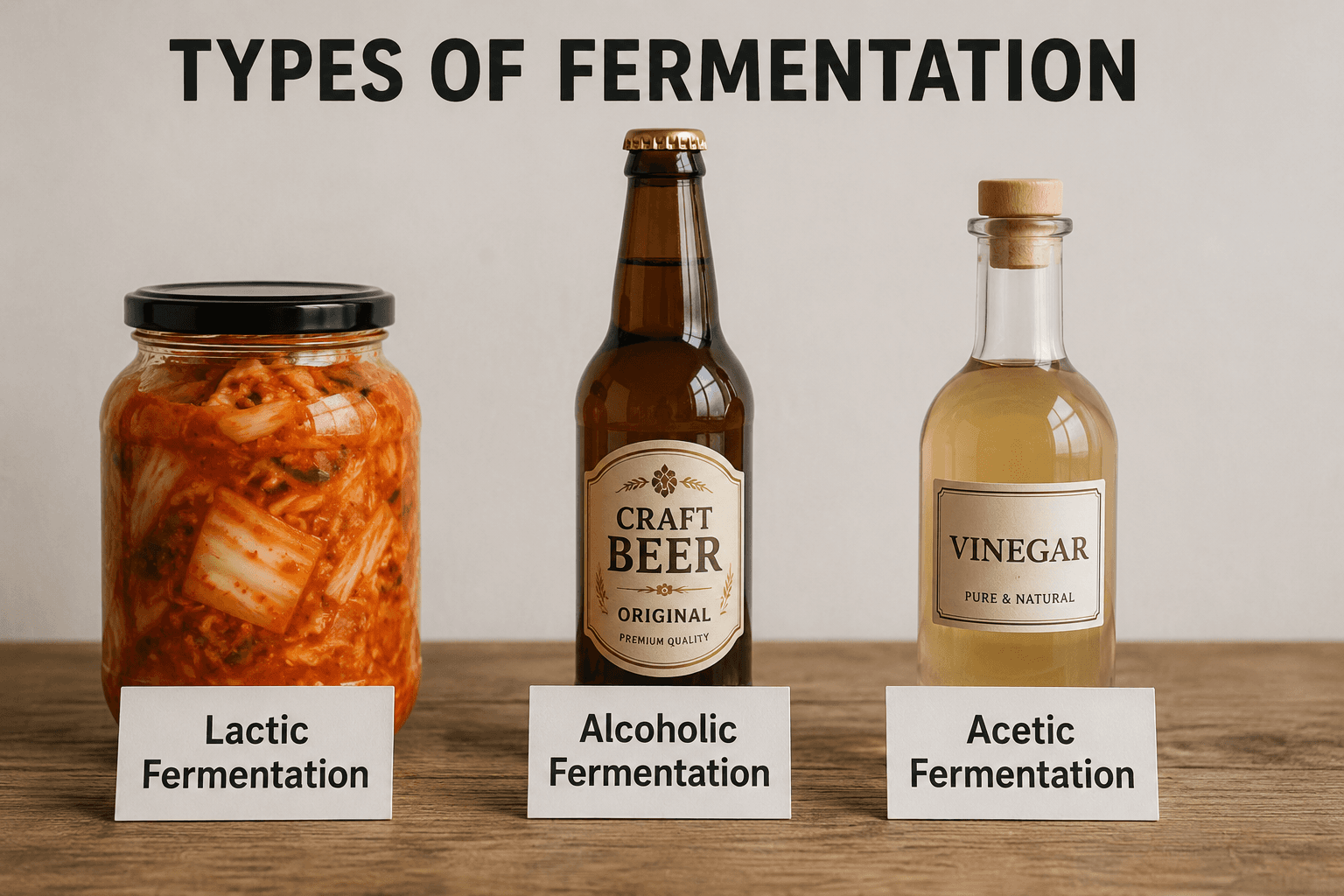
There are three types of fermentation, and each is just one way that microbes turn sugars into more interesting things. These "interesting things" are all more acidic than the sugars that create them, and all kill bad microbes, which are alkaliphilic, and therefore have adapted to sabotage your acid-producing immune system. Acid producing microbes are all incentivised to keep their host healthy, because they love the acid your body makes. Thus, fermented foods and drinks are safe from the evil alkaliphiles, and they make wonderful probiotics, because they are filled with a bunch of tiny creatures whose biological goals align with your body's (except sometimes in alcoholic drinks when it's yeast doing the fermenting and all the microbes end up gone or dormant, but we'll get to that). The three main types of fermentation are as follows:
1. Alcoholic Fermentation.
Alcoholic Fermentation is responsible for beverages such as beer and wine, and it happens to a lesser extent in things like cider and traditional kvass. It produces both alcohol and carbon dioxide, creating both the drink's alcohol content and natural carbonation. This process occurs when yeasts break down sugars into ethanol and carbon dioxide in the absence of oxygen. Carbonation doesn't always imply that the final product will be alcoholic though, as the next type of fermentation can remove alcohol.
2. Acetic Fermentation
Acetic Fermentation is responsible for vinegar and many foods preserved with it, and it actually happens when acetic acid bacteria (AAB, like Acetobacter) consume both sugars and alcohol, lowering the ABV of the final product. It creates the sharp, tangy flavor associated with vinegar, and it's one of the big things behind kombucha. It requires oxygen to the oxidize ethanol.
3. Lactic Fermentation.
Lactic Fermentation is responsible for Kimchi, Kvass, and various dairy products like cheeses and kefir. It is non-alcoholic and produces a refreshing sour-ish flavor. It happens when LAB (lactic acid bacteria) break down sugars into lactic acid. LAB tend to be really good for your gut biome.
Of these three types, alcoholic fermentation is the most common in human cuisine. It has been explored to no end by humans. The hours of scientific experimentation and the perfecting of the crafts of beer and wine making that have been spent in human history are endless. People are obsessed. Beer brewers alone, who occupy a small microcosm of the alcoholic fermentation world are probably more obsessive than even those weird lactic acid sourdough cultists (sorry, Lydia) who make up the majority of the Lactic Fermentation world. This got me thinking. Why are there so few Lactic and Acetic acid fermentation drinks, when the number of possible alcoholic drinks is so large? If you ask a random guy on the street (granted, he has to know fermentation science to be able to answer this question) what some drinks are that use non-alcoholic fermentation, he would probably say "Well, for Lactic we've got Kvass, maybe a few niche fermented juice things, half of kombucha, and a bunch of dairy drinks that are really just half-finished cheeses, and for acetic we basically have vinegar and the other half of kombucha." So why? Well, vinegar and kombucha makers have kind of pushed acetobacter to it's limit with drinks, since unless you have very special narrow conditions like in kombucha, it's just going to end up being vinegar. With lactobcillus, though, I honestly don't know. LAB can consume all the sugars that yeast can, and it produces just as complex flavor profiles as yeasts do when they do the bulk of the fermentation work. Maybe it's just that people by and large like alcohol better than probiotic drinks, and nobody's ever tried exploring the full search space of lactic acid drinks.
I want to change that. As a Christian, I don't drink alcohol, and I know there are many, many people like me who think fermentation science is awesome and want to get into it, but that feel restricted by the non-alcoholic options available. So how could we push the frontier of the lactic acid drink search space? Well, first, let's think up a vector representation of our search space and line it up with the search space of beer to compare how we do on size.
As you can see, if you look at the two example vectors and think about them intuitively, the dimention of the search space of possibilities for a lactic acid drink actually is larger than the search space over a beer. Whether the lactic acid search space is as large as the search space of all alcoholic beverages is another story (I'm sure the maturity of the craft of making existing niche lactic fermented juices could grow to rival the winemaking industry given the right dedicated people), but let's actually trim down our lactic fermentation search space to cover only the dimensions covered by beer, by mandating that we use some kind of grain bill (just so I can actually focus on one thing at a time here). What we are left with is essentially a kvass-oid beverage with a world of herbs, microbial cultures, and grain bills to explore. Hence, I call my "generalised kvass"/"beer but it's lactic acid" koid (short for kvass-oid). The world of koids might be, if I dare say it, larger than the world of beers, because we don't need to put in hops to kill off the lactobacillus, and the microbe space dimensionality is actually bigger because we invite both yeasts, and lactobacillus (yes, I know sour beer exists, but they tend to be high-ABV and still don't touch this new niche).
In so many words, my proposal is this:
Start a movement similar to the craft beer movement, but it focuses on non-alcoholic lactic fermentation-based koid drinks, which for some reason have never been explored in all of human history (because if it's not on the internet, it clearly never happened).
Now. I'm going to go and see if I can fix the polyexosachheride sludge being produced in this batch of sourdough, fennel, and rosemarry koid by either a pediococcus infection or a mutated strain of lactobacillus 🤓
P.S. I also propose measuring alcohol, lactic acid, and acetic acid by volume to measure the character of a fermentation in a generalised way. Not sure why those three numbers have not appeared in fermentation literature together. Simple vector and I wonder now what the matrix form of the operator that maps from to looks like.